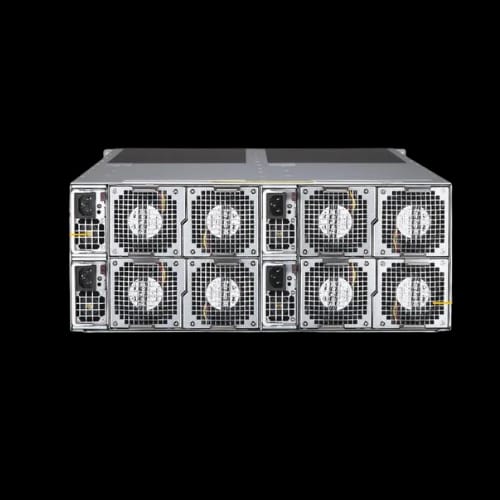
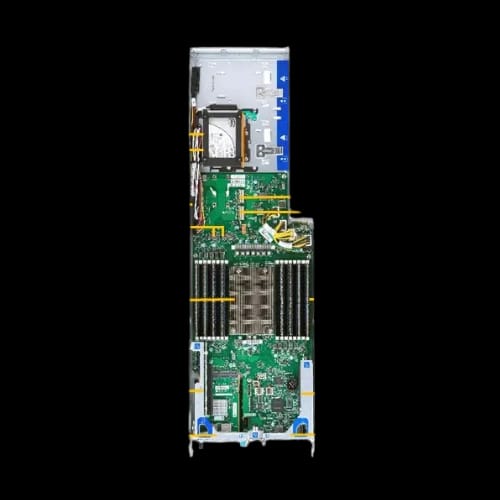
AMD EPYC 8-Node Rack Server
Key Features
- AMD EPYC 8-Node
- 4U FatTwin
- Single-socket nodes
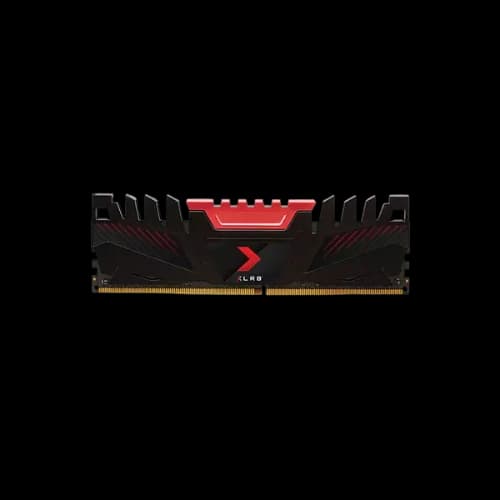
- 4TB ECC DDR4-3200MHz
- PCIe 4.0 x16 Expansion
- Titanium 2200W Redundant PSU
- NIST 800-193 Secure Boot
Share:
Any Questions? Ask On
Technical Specifications
System Overview
Processor
Memory
Expansion
Storage
Networking
Management
Front I/O
Security
Cooling
Power Supply
Chassis
Environment
Warranty Info
Product Description
AMD EPYC 8-Node Rack Server: Eight Nodes, One 4U Chassis, Zero Compromise
Eight fully independent server nodes packed into a single 4U chassis — the AMD EPYC 8-Node Rack Server redefines density for enterprise workloads. If your data center demands maximum compute per rack unit, this FatTwin architecture delivers exactly that.
Bangladesh's enterprise IT sector is scaling fast. Hyperscale workloads, HPC clusters, and cloud infrastructure demand hardware that does not stall under pressure. At PCB Store, this server stands as one of the most compute-dense solutions available in Bangladesh today.
What Is the AMD EPYC 8-Node Rack Server? Performance Overview
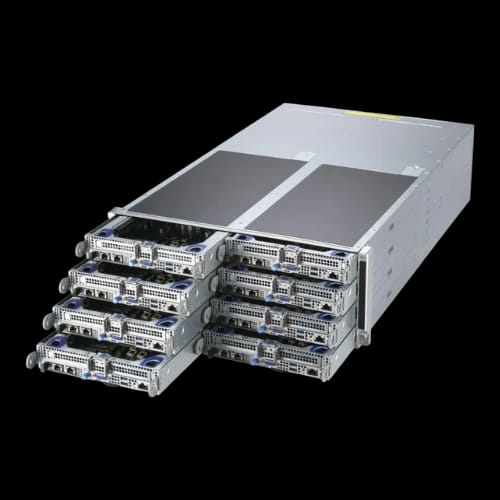
The AMD EPYC 8-Node Rack Server is a 4U FatTwin rackmount system housing eight hot-pluggable compute nodes in a single enclosure. Each node runs its own Single Socket SP3 AMD EPYC 7002 or 7003 Series processor, operates independently, and supports up to 4TB ECC DDR4-3200MHz memory across 16 DIMM slots.
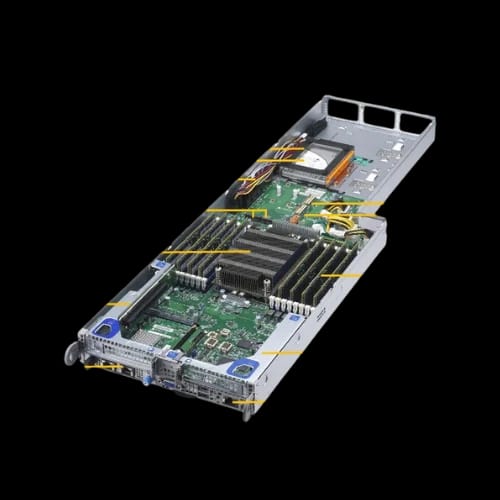
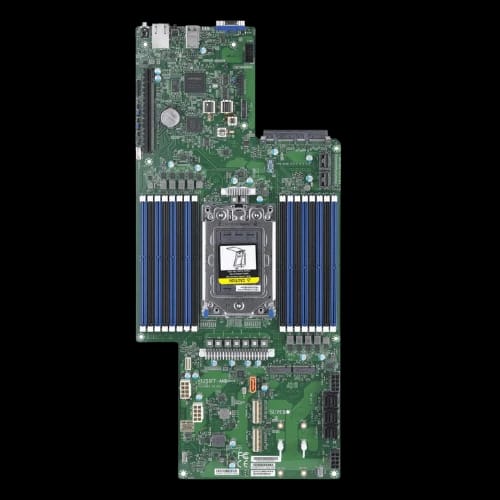
This is not a blade system. Each node functions as a standalone server — with dedicated storage, PCIe expansion, and independent management. The motherboard per node is the Super H12SSFF-AN6.
Key performance facts per node:
- CPU: Single AMD EPYC 7002/7003 Series, up to 280W TDP (air-cooled)
- Memory: Up to 4TB via 16 DIMM slots, DDR4-3200MHz ECC RDIMM/LRDIMM at 1.2V
- PCIe: 2x PCIe 4.0 x16 LP + 1x PCIe 4.0 x16 AIOM (OCP 3.0 compatible)
- Storage: 4x fixed 2.5" SATA bays (Option A: 2x NVMe) + 2x M.2 PCIe 4.0 x4 NVMe/SATA slots
- Management: IPMI 2.0 with KVM-over-LAN and virtual media over LAN
For teams sourcing AMD EPYC server solutions in Bangladesh, this machine checks every box for density, memory bandwidth, and expandability.
AMD EPYC 8-Node Rack Server Key Features and Benefits
Eight Hot-Pluggable Nodes — Full Independence in 4U
Each of the eight nodes is hot-pluggable, meaning you can service or replace a node without taking down the entire system. In 24/7 data center environments, this is critical. No downtime for node-level maintenance.
The 4U FatTwin form factor packs these eight independent servers at a density that traditional 1U or 2U rackmounts cannot match. You get eight server footprints in four rack units — a direct cost reduction in power, cooling, cabling, and floor space.
Memory Capacity Built for Serious Workloads
Each node supports up to 4TB of ECC memory — the kind of memory depth that in-memory databases, large-scale analytics, and scientific simulations demand. The DDR4-3200MHz speed and support for 3DS LRDIMM modules means you can run memory-bound HPC workloads without bottlenecks.
When evaluating ECC RAM options for enterprise servers in Bangladesh, this per-node memory ceiling is one of the highest available at this form factor.
AMD EPYC 7003 Series with 3D V-Cache Support
The latest AMD EPYC 7003 processors with AMD 3D V-Cache Technology are supported, pending BIOS version 2.3 or newer. 3D V-Cache dramatically expands the processor's L3 cache, boosting performance on cache-sensitive workloads like technical computing, rendering, and simulation.
This makes the system particularly relevant for HPC cluster nodes and compute-dense cloud infrastructure.
Storage, Expansion, and I/O Configuration
Per-node storage flexibility covers most deployment scenarios:
- Default: 4x internal fixed 2.5" SATA (6Gbps) bays
- Option A: 2x internal fixed 2.5" NVMe bays
- M.2: 2x PCIe 4.0 x4 NVMe/SATA (M-key, 2260/2280/22110)
The PCIe 4.0 x16 AIOM slot (OCP 3.0 compatible) gives network flexibility — connect to your preferred AIOM or AOC network card for 10GbE, 25GbE, or higher throughput. The dedicated BMC LAN port (1GbE RJ45) keeps out-of-band management completely separate from production traffic.
Front I/O per node includes 2x USB 3.0 ports and 1x VGA — practical for local access during deployment and maintenance.
Power, Cooling, and Efficiency at Scale
Titanium-Level Power Efficiency
The chassis runs four 2200W redundant power supplies in a 2+2 configuration, certified at Titanium Level (96% efficiency). At rack scale, this efficiency difference translates directly to lower electricity bills and reduced heat load.
Power input supports a wide range of voltages from 100-127V up to 230-240V AC/DC — compatible with Bangladeshi commercial power infrastructure and international data center standards.
Thermal Management Per Node
Each node uses an 8cm heavy-duty fan with PWM control and full tachometer monitoring. The system includes:
- CPU and chassis temperature monitoring
- 7-phase switching voltage regulator per node
- Thermal control linked to fan speed status
Supporting air-cooled CPUs up to 280W TDP, the thermal architecture handles even high-core-count EPYC processors without requiring exotic liquid cooling.
Security and Platform Management
This system ships with a serious security stack — not an afterthought:
- TPM 2.0 hardware security module
- Silicon Root of Trust (RoT) — NIST 800-193 Compliant
- Cryptographically signed firmware
- Secure Boot and secure firmware updates
- Automatic firmware recovery
- System lockdown capability
For government, financial, and cloud service providers in Bangladesh handling sensitive workloads, this compliance posture matters. The IPMI 2.0 management interface adds full remote platform control — KVM-over-LAN, virtual media, and PC health monitoring across CPU, chipset, memory, and fan subsystems.
Use Cases: Where the AMD EPYC 8-Node Rack Server Excels
This system targets specific high-demand environments:
- Hyperscale and Hyperconverged Infrastructure — high node count per rack, shared power and cooling
- HPC Clusters — per-node EPYC processors with 3D V-Cache support and massive ECC memory
- Cloud Computing Platforms — independent nodes for VM density and multi-tenant isolation
- Data Center Consolidation — replace eight 1U servers with a single 4U chassis
- Cluster Node Deployments — fast deployment with hot-plug node swaps
Organizations building high-performance server infrastructure in Bangladesh — whether for private cloud, scientific computing, or enterprise applications — will find this system directly suited to scale.
Warranty and Reliability
Server systems, available through PCB Store in Bangladesh, carry enterprise-grade build quality and manufacturer warranty. For specific warranty terms and regional support options, contact PCB Store directly. Server's global support infrastructure backs this platform — covering BIOS updates, compatibility guidance, and hardware replacement.
Where to Buy the AMD EPYC 8-Node Rack Server in Bangladesh
PCB Store is Bangladesh's trusted destination for enterprise server hardware — including AMD EPYC servers, Intel Xeon servers, server racks, ECC RAM, SAS hard drives, SAS SSDs, server power supplies, server casings, and NAS storage servers. Whether you are configuring a new HPC cluster or expanding an existing data center, PCB Store's team understands the technical requirements.
Stock availability on high-density enterprise servers like this can be limited. For accurate AMD EPYC 8-Node Rack Server pricing in Bangladesh, current stock status, and bulk procurement options, reach out to PCB Store directly through their website or visit their location in Dhaka. Enterprise buyers can also request custom configurations — storage controllers, network cards, and additional M.2 drives — tailored to specific workload requirements.
PCB Store also stocks the AMD EPYC 64 Core 2U Rack Server — a strong option for teams needing maximum core density in a compact 2U footprint.
Do not wait on procurement decisions for infrastructure this critical. Compute density at this level rarely sits on shelves long.
Delivery Charge Info
Inside Dhaka: ৳0
Outside Dhaka: ৳0
FAQs
What AMD EPYC processors does this server support per node?
Each node supports a single Socket SP3 AMD EPYC 7002 or 7003 Series processor. EPYC 7003 CPUs with 3D V-Cache Technology require BIOS version 2.3 or newer to function correctly.
How much memory can each node in this server hold?
Each node supports up to 4TB of ECC DDR4 memory at 3200MHz using 16 DIMM slots. Supported types include RDIMM and 3DS LRDIMM at 1.2V operating voltage.
Can I replace a single node without shutting down the whole system?
Yes. All eight nodes are hot-pluggable. You can remove, replace, or service any individual node without powering down the chassis or affecting remaining nodes.
What storage options are available per node?
Default configuration provides 4x fixed 2.5" SATA bays. Option A substitutes 2x NVMe bays. All nodes also include 2x M.2 PCIe 4.0 x4 slots for NVMe or SATA M.2 drives.
What is the power supply configuration and efficiency rating?
The chassis uses four 2200W power supplies in a 2+2 redundant configuration rated at Titanium Level (96% efficiency), supporting AC input from 100V to 240V.
AMD EPYC 8-Node Rack Server vs. traditional 1U servers — which is better for HPC?
The 8-Node FatTwin delivers eight compute nodes in 4U versus eight separate 1U servers occupying 8U. You save rack space, cabling, and power distribution costs while maintaining full node independence — a clear advantage for HPC cluster builds.
Is this server suitable for cloud computing workloads in Bangladesh?
Yes. Independent nodes, massive per-node memory capacity, PCIe 4.0 expansion, and IPMI 2.0 management make it well-suited for private cloud and multi-tenant workload isolation.
Does this server support NVMe drives?
Yes. Each node supports NVMe via M.2 PCIe 4.0 x4 slots. Optional NVMe bay configuration replaces SATA bays with 2x 2.5" NVMe bays, though additional storage controllers or cables may be required.
What security features does the AMD EPYC 8-Node Rack Server include?
The system includes TPM 2.0, Silicon Root of Trust (NIST 800-193 compliant), cryptographically signed firmware, Secure Boot, automatic firmware recovery, and system lockdown capability.
What is the price of the AMD EPYC 8-Node Rack Server at PCB Store in Bangladesh?
Pricing varies based on configuration, processor selection, and current stock. Contact PCB Store directly for an up-to-date quote. PCB Store is the go-to source for enterprise server and NAS pricing in Bangladesh.
Related Products
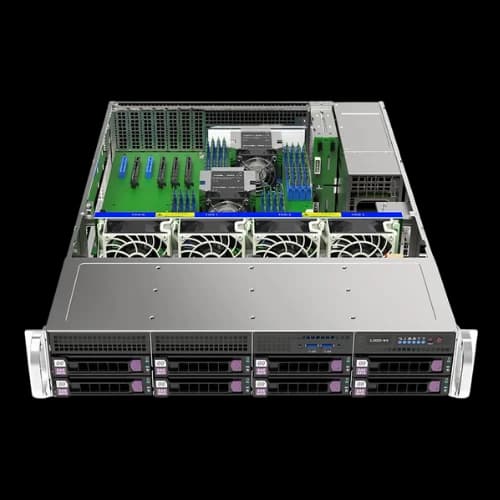
৳715,000
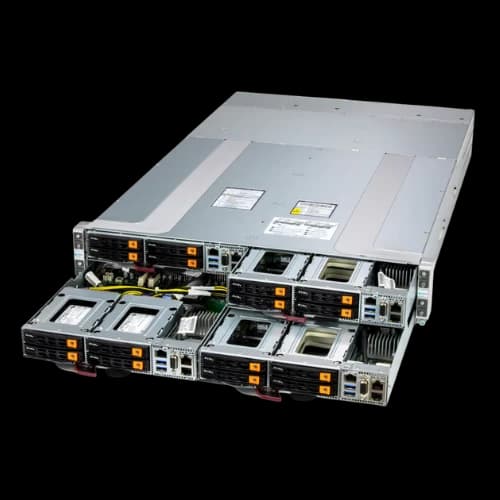
৳1,888,888
Popular Products