AMD Threadripper Price in Bangladesh
AMD Threadripper
1
/1
Filter
Filter
Description
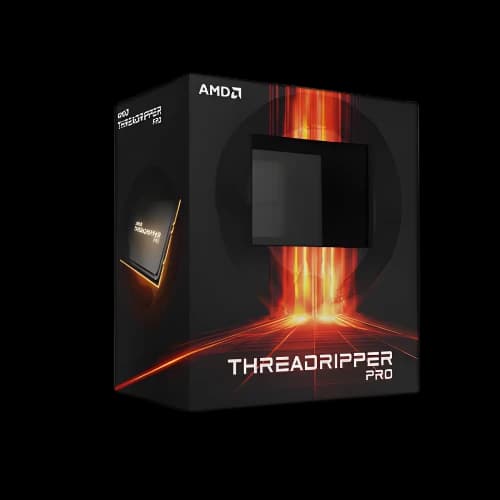
AMD Threadripper represents the pinnacle of high-end desktop (HEDT) processor design, built for professionals and power users who demand extreme multi-threaded performance, massive memory bandwidth, and workstation-class expandability.
Designed to bridge the gap between mainstream desktop CPUs and enterprise servers, Threadripper delivers exceptional performance for content creation, software development, virtualization, scientific computing, and modern AI workloads.
AMD Threadripper plays a critical role in today’s AI & Workstation HPC environments, where sustained performance, multi-GPU scalability, and high-speed I/O are essential for professional productivity.
What Is AMD Threadripper?
Developed by AMD, Threadripper is a family of high-performance processors engineered specifically for professional workstations and enthusiast systems.
Built on AMD’s Zen architecture, modern Threadripper processors deliver extremely high core counts, advanced memory architectures, and expansive PCIe connectivity that far exceed mainstream desktop platforms.
Current Threadripper offerings are based on modern Zen architectures and are optimized for heavily parallel workloads such as 3D rendering, large-scale code compilation, AI data preprocessing, virtualization, and simulation-driven computing.
Threadripper Product Line Overview
AMD segments the Threadripper platform into two primary categories:
Threadripper (HEDT Series)
- Designed for enthusiasts and advanced creators
- Uses the TRX50 platform
- Supports quad-channel DDR5 memory
- Ideal for high-end desktops requiring strong expansion
Threadripper PRO (Workstation Series)
- Built for professional and enterprise workstation use
- Uses the WRX90 platform
- Supports octa-channel DDR5 memory
- Offers enhanced stability, security, and manageability
This clear segmentation allows users to select the right platform based on workload intensity, memory requirements, and long-term scalability.
Key Features and Specifications
Exceptional Core and Thread Counts
AMD Threadripper processors scale from high-core-count desktop configurations up to workstation-class models featuring as many as 64 cores and 128 threads. This parallel processing capability enables efficient handling of demanding workloads such as:
- 3D rendering and ray tracing
- Large software compilations
- Multi-VM and containerized environments
- Engineering simulations and data analytics
Advanced DDR5 Memory Architecture
Threadripper platforms support DDR5 memory in quad-channel or octa-channel configurations, delivering substantially higher memory bandwidth than mainstream desktop CPUs.
This architecture is critical for memory-intensive workloads such as AI preprocessing, large dataset analysis, and professional media pipelines.
Threadripper PRO systems support extremely high memory capacities, making them suitable for research, simulation, and enterprise-grade workstation deployments.
Extensive PCIe 5.0 Expansion
Modern Threadripper platforms provide up to 128 PCIe 5.0 lanes, enabling unmatched flexibility for expansion. Users can deploy multiple GPUs, ultra-fast NVMe storage arrays, capture cards, and accelerator hardware without bandwidth bottlenecks.
This makes Threadripper an ideal foundation for multi-GPU workstations and advanced compute-focused builds.
Ideal Use Cases for AMD Threadripper
Content Creation and Media Production
Threadripper delivers substantial performance gains for video editing, animation, and visual effects workflows.
Professional applications can efficiently utilize high core counts to reduce render times and accelerate exports, even with high-resolution content.
Many professional builds pair Threadripper systems with Nvidia Quadro GPUs to ensure certified drivers, long-term stability, and optimized performance in CAD, 3D rendering, and media production environments.
Software Development and Compilation
Developers working with large codebases benefit significantly from Threadripper’s parallel processing capabilities.
Faster compilation times, concurrent builds, and the ability to run multiple development environments simultaneously result in measurable productivity gains.
Virtualization and Professional Lab Environments
Threadripper excels in virtualization scenarios, allowing users to run numerous virtual machines with dedicated CPU cores and memory allocation.
This makes it a popular choice for system administrators, DevOps professionals, and advanced home lab users.
Scientific Computing, AI, and Data Analysis
Threadripper bridges the gap between desktop and server computing.
Its high core counts, large memory capacity, and PCIe expansion make it suitable for simulation workloads, numerical modeling, financial analysis, and AI data preparation.
While enterprise platforms like Nvidia DGX systems dominate large-scale AI training, Threadripper offers a powerful desktop alternative for local AI development, experimentation, and preprocessing tasks.
Performance Advantages of AMD Threadripper
Threadripper’s performance advantage extends beyond raw core count. Modern Zen architectures provide strong single-threaded performance alongside excellent multi-threaded scalability, ensuring responsive performance across a wide range of workloads.
Advanced interconnect technologies optimize communication between cores and memory, while select models benefit from large cache configurations that improve performance in cache-sensitive applications such as CAD, simulation, and technical computing.
Despite their performance capabilities, Threadripper processors maintain competitive efficiency through advanced manufacturing processes and intelligent power management.
Platform Considerations and System Requirements
Building a Threadripper system requires a dedicated workstation-class platform.
Selecting the right WorkStation Motherboard is critical, as TRX50 and WRX90 platforms are designed to handle high power delivery, extensive PCIe layouts, and full DDR5 memory channel support.
Additional considerations include:
- High-quality DDR5 memory, ideally populating all channels
- Robust cooling solutions rated for sustained high workloads
- Adequate power supply capacity and proper chassis airflow
Careful component selection ensures long-term system stability and consistent performance.
AMD Threadripper vs Competing Platforms
Users evaluating Threadripper often compare it with AMD EPYC processors, which are designed for full-scale server environments requiring maximum memory capacity and enterprise-grade scalability.
Threadripper offers similar computational power in a more accessible workstation-oriented form factor.
On the Intel side, Intel Xeon processors remain a common alternative for workstation and enterprise systems. However,
Threadripper typically provides higher core counts and greater PCIe expansion flexibility at comparable price tiers, making it a strong choice for compute-heavy desktop workstations.
AMD Threadripper Buying Guide
Choosing the right AMD Threadripper processor depends on workload type, expansion requirements, and long-term growth plans.
Threadripper is ideal if you:
- Run heavily multi-threaded professional applications
- Require multiple GPUs or high-speed storage
- Work with large datasets or memory-intensive tasks
- Need workstation-class performance without server infrastructure
Key factors to consider:
- Core Count: Higher cores benefit rendering, compilation, and virtualization
- Memory Channels: Quad-channel suits most creators; octa-channel benefits AI and simulation workloads
- PCIe Expansion: Essential for multi-GPU and accelerator-heavy builds
- Platform Type: HEDT for enthusiasts, workstation platforms for professionals
If your workflow scales with cores and bandwidth, Threadripper offers outstanding long-term value.
The Future of AMD Threadripper
AMD continues to evolve the Threadripper platform alongside advances in processor architecture, memory technology, and I/O standards.
As AI workloads become increasingly common on desktop systems, Threadripper’s PCIe 5.0 scalability positions it well for next-generation GPUs such as Nvidia Blackwell.
Future generations are expected to further enhance performance, efficiency, and AI-oriented capabilities, reinforcing Threadripper’s role in advanced workstation and HPC environments.
Why Choose PCB Store for your AMD Threadripper?
Investing in a Threadripper workstation requires expert component selection and platform compatibility. PCB Store specializes in workstation and HPC solutions tailored for professionals, creators, and enterprise users.
Why professionals choose PCB Store:
- Genuine workstation-grade components
- Expert guidance for Threadripper, AI, and HPC builds
- Proven compatibility across CPUs, memory, cooling, and GPUs
- Support for advanced configurations, including multi-GPU and high-memory systems
Whether building a content creation workstation or an AI-focused compute system, PCB Store helps ensure reliability, performance, and long-term stability.