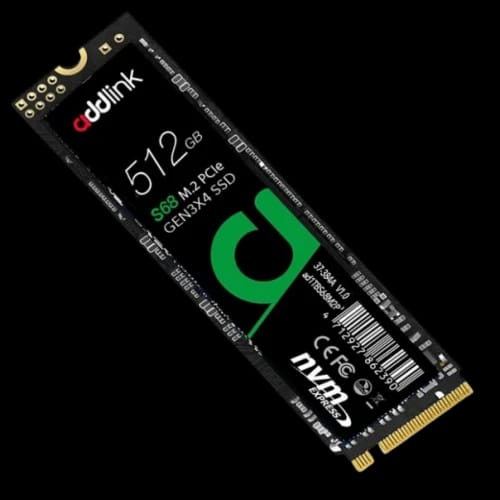
Addlink S68 512GB M.2 2280 PCIe 3x4 NVMe SSD
Key Features
- Addlink S68 512GB
- NVMe Gen3x4
- M.2 2280
- 3D QLC NAND
- 2100MB/s Read
- 1700MB/s Write
Out Of Stock
Share:
Any Questions? Ask On
Technical Specifications
General Information
Storage & Performance
Physical Specification
Temperature
Warranty
Product Description
High-performance storage is no longer a luxury upgrade; it is a baseline requirement for modern desktops and laptops. Faster boot times, quicker application launches, and smoother multitasking all depend on how efficiently your system handles data at the hardware level. This is where NVMe solid-state drives reshape expectations for everyday computing and performance-focused builds alike.
Within the broader ecosystem of Pc Componanat, storage plays a decisive role in how responsive and future-ready a system feels. Users upgrading from SATA-based drives immediately notice the leap in speed and stability, especially when workloads involve gaming, content creation, or large file transfers. Understanding how PCIe-based SSDs fit into this ecosystem helps buyers make confident, performance-driven decisions without overspending.
Why NVMe SSDs Matter for Modern Builds
Traditional hard drives and even early SATA SSDs were never designed for today’s data-intensive workflows. NVMe technology removes those bottlenecks by communicating directly over the PCIe bus, unlocking far higher throughput and lower latency.
When users explore storage options within the SSD category, the appeal lies in more than raw speed. NVMe drives reduce system strain, improve energy efficiency, and scale better with modern CPUs and motherboards. These advantages make them a practical upgrade for both new builds and system refreshes.
One of the strongest reasons NVMe adoption continues to rise is consistency. Unlike older storage formats, NVMe drives maintain performance under sustained workloads, which is critical for tasks like video rendering, game loading, or managing large datasets.
Performance Characteristics That Actually Matter
Marketing specs often overwhelm buyers, but a few real-world metrics tell the full story. Sequential read and write speeds define how quickly large files move, while endurance ratings such as MTBF reflect long-term reliability.
For users comparing options inside the Addlink SSD segment, balanced specifications often matter more than peak numbers. Drives designed with stable controllers and efficient NAND flash deliver smoother everyday performance, not just benchmark wins.
Here are the core benefits users typically experience after switching to NVMe storage:
- Faster boot and load times across operating systems and applications
- Reduced latency during multitasking and data-heavy workflows
These advantages directly translate into productivity gains and a noticeably more responsive system, even on mid-range hardware.
Form Factor and Compatibility Considerations
The M.2 2280 form factor has become the industry standard for internal SSDs, fitting seamlessly into most modern motherboards. Its compact size eliminates cable clutter and improves airflow inside the case.
Buyers often overlook compatibility details, but confirming PCIe generation support is essential. NVMe Gen3 drives remain widely compatible, making them a safe choice for a broad range of systems without requiring the latest motherboard revisions.
Within ecosystems that include brands like Addlink, compatibility and thermal efficiency are key selling points. Well-designed drives maintain stable temperatures under load, reducing the risk of throttling and extending lifespan.
Another practical advantage is ease of installation. Unlike traditional drives, M.2 SSDs install directly onto the motherboard, making upgrades faster and cleaner for both beginners and experienced builders.
Use-Case Driven Value
Not every user needs flagship-level speeds, but most benefit from consistent performance. NVMe SSDs strike that balance by offering measurable improvements in daily tasks without excessive cost.
Common scenarios where NVMe storage delivers immediate value include:
- Gaming systems that require rapid asset loading and texture streaming
- Workstations handling large files, creative software, or virtual machines
These use cases explain why NVMe drives have become a default recommendation rather than a niche upgrade.
Conclusion: Making a Smart Storage Investment
Choosing the right SSD is less about chasing the highest advertised speed and more about aligning performance, reliability, and compatibility with your actual needs. NVMe technology has matured to the point where it delivers dependable gains across nearly every computing scenario.
For buyers narrowing their options, focusing on reputable manufacturers and proven specifications ensures long-term satisfaction. Exploring niche selections like budget-friendly NVMe options or performance-oriented collections within curated categories helps streamline the decision process while staying within budget.
If you are planning a system upgrade or a fresh build, targeted categories such as entry-level NVMe solutions or value-driven performance storage can guide you toward the right balance of speed and cost without unnecessary complexity.
Ready to Buy
The Addlink S68 512GB M.2 2280 PCIe 3x4 NVMe SSD delivers reliable Gen3 performance, efficient 3D QLC NAND, and a long 05-year manufacturing warranty, making it a smart choice for everyday upgrades and performance builds. You can confidently purchase this drive from PCB Store, your trusted destination for genuine components, and explore more options from Addlink to complete your system with confidence.
Delivery Charge Info
Inside Dhaka: ৳80
Outside Dhaka: ৳130
FAQs
What is the Addlink S68 512GB NVMe SSD designed for?
It is built for fast system upgrades, offering quicker boot times, smoother multitasking, and improved application loading for everyday computing and gaming.
Which interface does this SSD use?
The drive uses an NVMe PCIe Gen3x4 interface, allowing much higher data transfer speeds compared to traditional SATA SSDs.
What form factor is the Addlink S68?
It comes in the M.2 2280 form factor, making it compatible with most modern desktops and laptops that support M.2 NVMe slots.
How fast are the read and write speeds?
The SSD delivers sequential read speeds up to 2100 MB/s and write speeds up to 1700 MB/s under optimal conditions.
What type of flash memory does it use?
It uses 3D QLC NAND flash, balancing storage density with reliable everyday performance.
Is this SSD suitable for gaming and creative work?
Yes, it works well for gaming, content creation, and general productivity by reducing load times and improving overall system responsiveness.
What is the expected reliability of this drive?
The Addlink S68 has an MTBF rating of 1.5 million hours, indicating strong long-term reliability.
Does it require special cooling?
In most standard systems, no additional cooling is required, though proper airflow always helps maintain stable performance.
What warranty coverage is included?
The SSD is backed by a 5-year manufacturing warranty, providing peace of mind for long-term use.
Popular Products